Every business today operates in a world where customers start their journey online. A strong digital strategy helps you meet them there, turn interest into sales, and grow sustainably. Without it, even the best products stay hidden while competitors capture the market.
In 2026, more than 5.4 billion people use the internet daily. Over 93 percent of buying decisions begin with a search engine. Businesses that ignore this reality lose visibility and revenue fast. A clear digital strategy changes that by aligning your online presence with real customer needs.
The Shift to Digital-First Consumer Behavior
Customers now expect seamless experiences across websites, apps, and social platforms. They research products on mobile, read reviews, and compare prices before they buy. Traditional advertising alone no longer reaches them effectively.
A solid digital strategy puts your brand exactly where these buyers look. It creates consistent messaging from the first click to the final purchase. Companies that adapt see higher engagement and loyalty. Those that do not fall behind.
For small businesses especially, this shift levels the playing field. You no longer need a huge physical store to compete with larger rivals. Instead, smart online tools let you connect directly with global audiences at low cost.
Image Description: [A vibrant scene showing diverse customers browsing products on smartphones and laptops, surrounded by social media icons and search bars, representing modern digital consumer journeys in 2026 with clean, modern design]

How a Strong Digital Strategy Drives Revenue Growth
Revenue growth becomes predictable when you follow data instead of guesswork. Digital tools track every interaction, from website visits to email opens. You learn what works and double down on it.
Studies show businesses with mature digital strategies achieve up to 177 percent ROI from content marketing alone. They also report consistent lead growth and lower customer acquisition costs. In one case, a growing retailer increased organic traffic by over 60 percent after refining its online approach.
Digital channels also open new income streams. Think e-commerce stores, subscription models, or personalized offers powered by customer data. These options scale quickly without expensive storefront expansions.
Moreover, automation handles routine tasks like inventory updates or follow-up emails. This frees your team to focus on creative work that actually boosts sales. The result is faster growth with fewer resources wasted.
The Role of AI and Automation in Modern Digital Strategies
AI now sits at the heart of successful digital plans. In 2026, roughly 75 to 88 percent of businesses use AI in daily operations. Tools analyze customer patterns, predict trends, and even write personalized messages at scale.
A strong digital strategy integrates AI without replacing human touch. Chatbots answer questions 24/7 while human staff handle complex issues. Predictive analytics forecast demand so you stock the right items and avoid losses.
Small businesses gain the biggest edge here. Recent surveys reveal 82 percent of small employers already use at least one AI tool. Two-thirds report revenue increases, with many seeing gains over 10 percent. Time savings average five hours per week for owners and more for teams.
This level of efficiency turns limited budgets into powerful results. Your digital strategy becomes a living system that improves itself over time.
Competitive Advantage Through Digital Transformation
Competition intensifies every year, yet many businesses still rely on outdated methods. A strong digital strategy delivers the edge you need to stand out.
It helps you respond faster to market changes. Real-time data shows what customers want now, not last quarter. You launch targeted campaigns, test ideas quickly, and adjust before rivals catch up.
Digitally mature companies also enjoy better resilience. During economic shifts, they maintain visibility and keep revenue flowing through online channels. Research from leading firms confirms these businesses achieve higher profitability even in tough times.
Digital transformation extends beyond marketing. It streamlines operations, improves supply chains, and enhances employee collaboration. When every department works from the same connected platform, mistakes drop and productivity rises.
Measuring Success: Digital ROI and Analytics
You cannot improve what you do not measure. A complete digital strategy includes clear key performance indicators and regular reviews. Tools like analytics dashboards show exact returns on every campaign.
Focus on metrics that matter to your goals. Track not just clicks but actual sales, repeat purchases, and customer lifetime value. This approach reveals which channels deliver the best results.
Many companies see strong returns from data-driven decisions. Investments in analytics often produce at least an 11 percent boost in performance or profits. With proper tracking, you allocate budgets wisely and avoid spending on low-impact tactics.
Regular audits also catch issues early. You spot broken links, slow-loading pages, or outdated content before they hurt your brand. Over time, this discipline builds a high-performing digital presence that keeps growing.
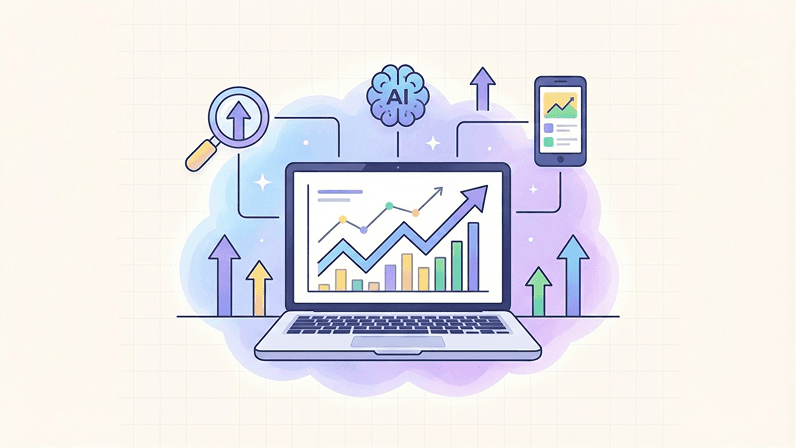
Image Description: [Clean infographic displaying upward growth charts, AI icons, analytics dashboards, and revenue metrics connected to digital strategy elements, using blue and green tones for a professional business feel]

Common Pitfalls and How to Build Your Own Strong Digital Strategy
Many businesses start digital efforts without a plan and quickly lose momentum. They chase trends, spread budgets too thin, or fail to train their teams. A strong digital strategy avoids these traps by setting clear objectives first.
Begin with your business goals. Decide whether you want more leads, higher sales, or better customer retention. Then map every online activity to those goals.
Next, audit your current online presence. Check your website speed, social activity, and email performance. Identify gaps and prioritize fixes that deliver quick wins.
Choose the right tools. Start simple with reliable platforms for websites, email, and analytics. Add AI features only after the basics work smoothly. Train your team so everyone understands the plan.
Finally, review progress monthly. Adjust based on data and keep learning from industry updates. This ongoing process turns a basic digital presence into a powerful growth engine.
Businesses that follow these steps report higher success rates and fewer wasted resources. They build momentum that compounds over months and years.
A strong digital strategy also creates internal links to other helpful content on your site. For example, explore our guide on digital marketing trends for small businesses to expand your knowledge. For deeper insights into proven approaches, see external research from McKinsey on AI in business or IDC reports on digital spending.
By investing time now, you position your business for long-term success. Customers stay engaged, operations run smoother, and growth becomes steady rather than sporadic.
admin
Digital product designer and software engineer at Quadiz studio, sharing insights on conversion-driven UI/UX design, modern web development, and building scalable software.