In creative, design, and development environments where speed and quality matter equally, adopting the right team communication habits that improve project delivery can be the difference between missed deadlines and consistent wins. Miscommunication causes 28% of project failures according to industry benchmarks, yet simple daily habits transform how teams align, iterate, and ship. This guide outlines eight practical team communication habits that improve project delivery you can implement immediately, building directly on our earlier advice for leading creative teams, managing remote design and dev teams, and giving better feedback without slowing progress.
These habits work especially well for distributed squads juggling Figma files, code reviews, and tight client timelines. When communication becomes intentional and efficient, projects move faster, morale stays high, and outcomes exceed expectations. Let’s explore the exact effective team communication for project success habits that forward-thinking leaders rely on in 2026.
Why Communication Habits Directly Impact Delivery Speed
Poor habits like endless email threads or unclear status updates create hidden drag on every sprint. In contrast, strong communication habits in remote design teams keep everyone moving in the same direction without constant check-ins. Teams that master these patterns report up to 35% faster delivery cycles because decisions happen quicker and rework drops dramatically.
The foundation is shifting from reactive chatter to proactive, structured exchanges. When you treat communication as a system rather than an afterthought, you unlock the full potential of your design and engineering talent. Start by auditing your current flows against these dev team communication best practices.
Make Asynchronous Updates the Default
One of the most powerful team communication habits that improve project delivery is defaulting to async status updates instead of live meetings. Require every team member to post a short written or Loom video update in a dedicated channel by 10 a.m. local time, answering three questions: What did I finish? What am I blocked on? What’s next?
This habit respects time zones and deep-work blocks while giving everyone full context before the day begins. In practice, it eliminates 60% of status meetings and keeps remote squads perfectly synced.
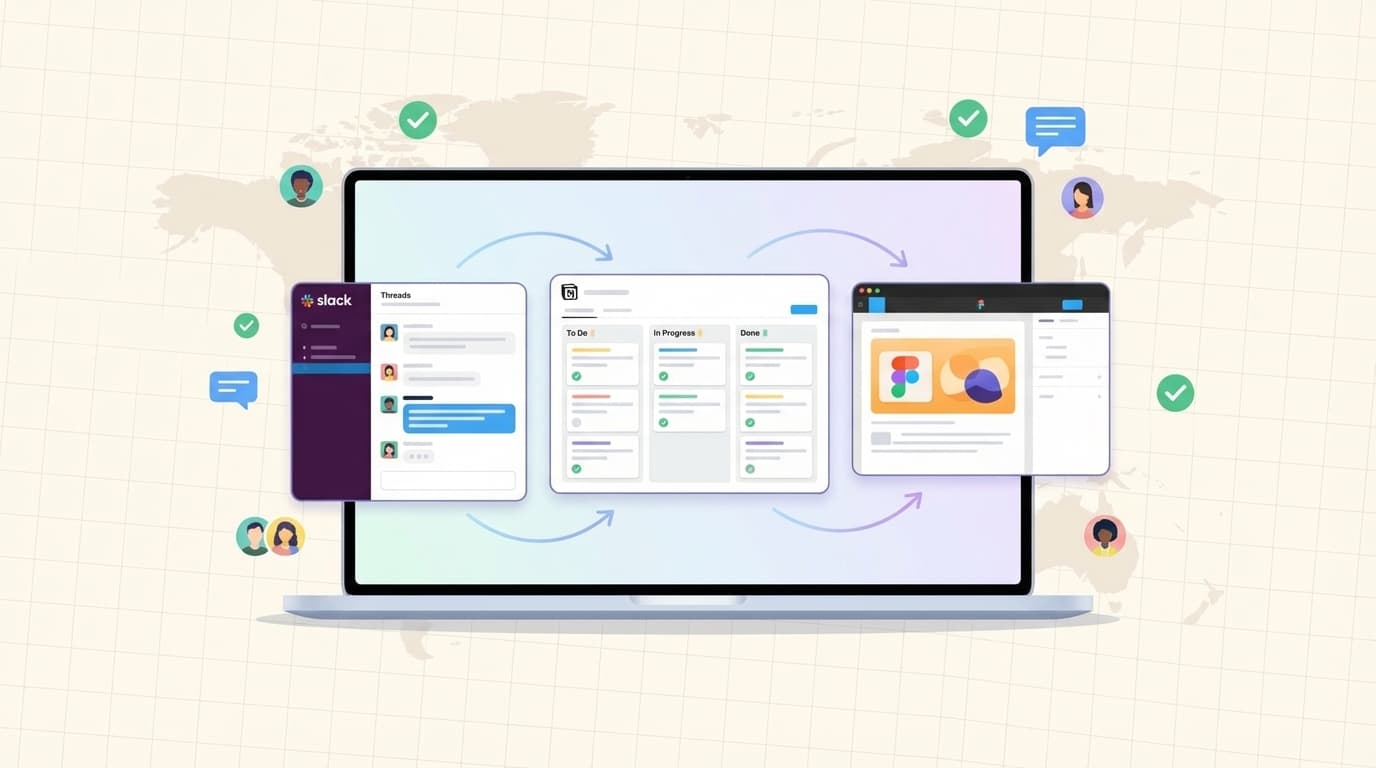
Image Description: [A clean digital workspace dashboard showing organized async update threads in Slack and Notion, with short Loom video thumbnails, color-coded status indicators, and team avatars across different time zones, highlighting seamless asynchronous communication habits that improve project delivery.]

Define Crystal-Clear Channels and Response Norms
Chaos disappears when everyone knows exactly where to post what. Create a one-page communication charter that lists channels and expected reply times: Slack for urgent questions (under 2 hours), Linear for tasks, Figma comments for design feedback, and email only for external stakeholders.
Publish this charter in your onboarding docs and reference it in every new project kickoff. The result is fewer “where should I post this?” questions and dramatically faster handoffs between designers and developers.
Use Visuals and Shared Context Instead of Long Text
Words alone slow teams down. Replace paragraphs with screenshots, annotated Figma links, or short screen recordings. Encourage “working in public” by dropping direct links to work-in-progress with one-sentence context.
This visual-first habit cuts reading time and misunderstanding. It’s especially effective in asynchronous communication habits for creative squads where a picture truly replaces a thousand words.
Run Short, Focused Syncs Only When Necessary
Protect deep-focus time by limiting live meetings to 15-minute alignment sessions twice per week. Use the first five minutes for quick wins and the rest for open blockers only. Record everything and post the summary so absentees stay in the loop.
This discipline ensures effective team communication for project success without stealing hours from actual creation. Teams that follow it ship features faster because energy stays on building rather than talking.
Image Description: [Diverse creative team members in a modern hybrid office and virtual video call grid, smiling and pointing at a shared digital whiteboard with clear action items and timelines, capturing the energy of focused team communication habits that improve project delivery in action.]

Embed Feedback Loops That Accelerate Rather Than Delay
Link daily communication directly to the feedback systems we covered earlier. End every async update with a one-click request for input and set 24-hour response expectations. Use the same structured templates across design critiques and code reviews so feedback arrives early and stays actionable.
When communication habits in remote design teams include built-in feedback rhythms, revisions happen in hours instead of days, keeping velocity high throughout the entire project lifecycle.
Celebrate Small Wins and Share Lessons Publicly
End each sprint with a five-minute “wins and learns” round where everyone posts one success and one improvement idea in a dedicated channel. Public recognition reinforces positive behaviors and turns communication into a motivating force.
This habit builds momentum and prevents small issues from growing into project risks. It also creates a living knowledge base that new team members can reference instantly.
Run Monthly Communication Retrospectives
Treat your communication system like any other process: review it monthly. Ask the team three simple questions in an anonymous survey: What’s working? What’s slowing us down? What should we try next?
Adjust one habit per retro based on real data. This continuous improvement loop ensures your team communication habits that improve project delivery evolve with your projects and people.
Tie Communication Metrics to Project Outcomes
Track simple leading indicators such as average time to first response, number of clarification questions per task, and sprint completion rate. Review these numbers alongside delivery metrics in your leadership syncs.
When you can see the direct link between better dev team communication best practices and faster project delivery, the entire team buys into the habits even more strongly.
For deeper tactics on related topics, revisit our guide on best practices for managing remote design and dev teams or how to give better feedback without slowing the team. External research from Harvard Business Review also supports these approaches in their piece on how communication drives team performance.
Start applying these team communication habits that improve project delivery today by picking just two that feel easiest for your squad. Within two weeks you’ll notice fewer surprises, quicker decisions, and more time spent creating instead of chasing alignment. Strong communication isn’t an extra task—it’s the invisible engine that turns good teams into exceptional ones that consistently beat deadlines and delight stakeholders in 2026 and beyond.
Thumbnail Image Prompt: Create a clean, minimal, and simple thumbnail image for the blog post "Team Communication Habits That Improve Project Delivery." Show a bright modern workspace with a large shared digital screen displaying clean Slack threads, Notion task boards, and a Figma preview connected by light flow arrows. Subtle floating icons of checkmarks, speech bubbles, and team avatars across a faint world map. Use soft neutral colors like light gray, teal accents, and white background with plenty of negative space. High-resolution, flat design style with inspirational yet professional vibe suitable for SEO blog thumbnail. Clean minimalist composition, 16:9 aspect ratio, no text on image.
admin
Digital product designer and software engineer at Quadiz studio, sharing insights on conversion-driven UI/UX design, modern web development, and building scalable software.