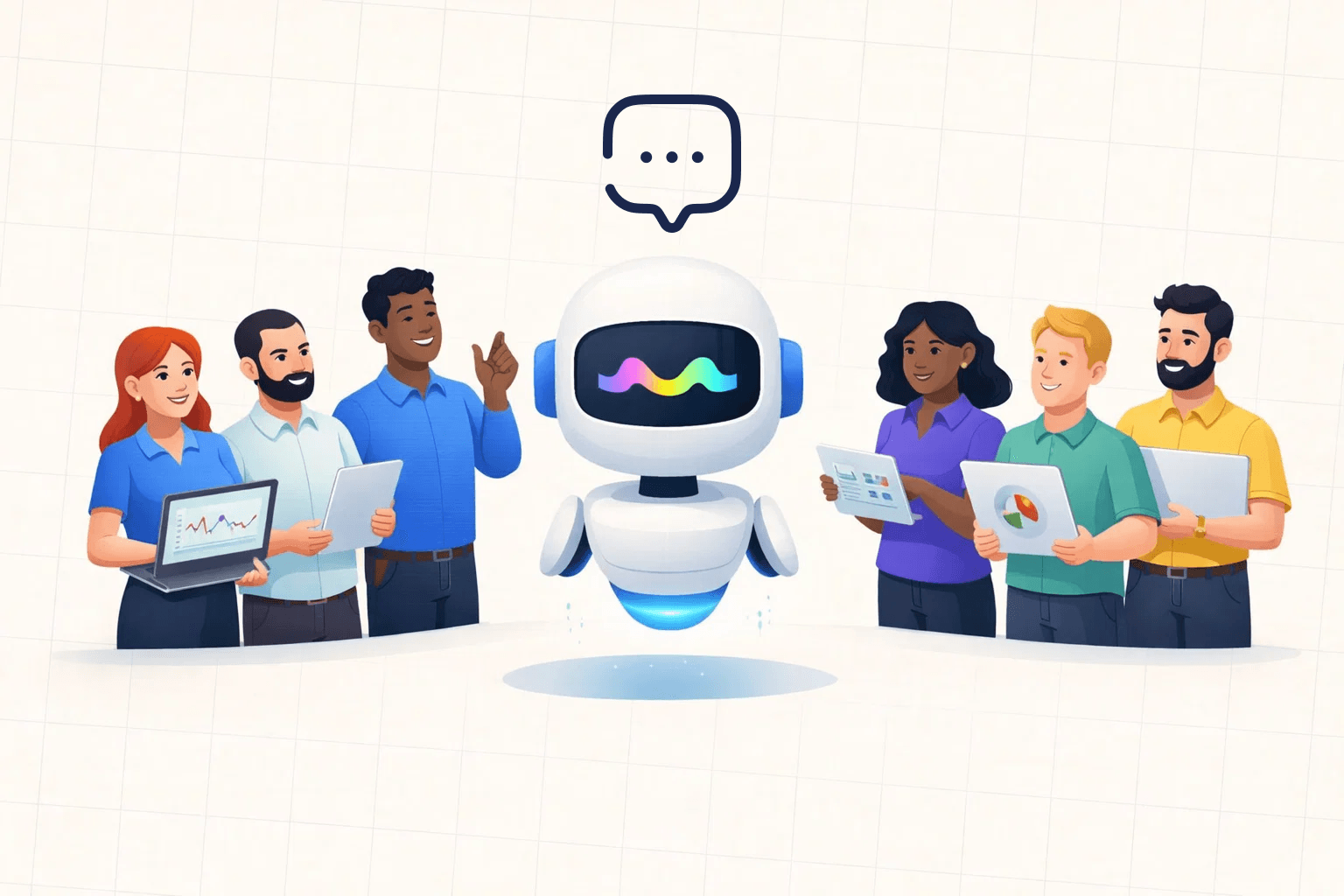
Practical AI use cases in business are transforming how growing teams operate in 2026. Instead of hiring more staff for extra workload, smart companies use AI to automate repetitive tasks, improve decision-making, and deliver personalized results at scale. Practical AI use cases in business now deliver measurable ROI in weeks, allowing startups and mid-size teams to compete with larger players while keeping costs under control.
AI-Driven Customer Service Automation
Practical AI use cases in business deliver the biggest impact in customer support. Intelligent chatbots and virtual agents handle 70-80% of routine questions 24/7, escalating only complex cases to humans. Growing teams save thousands of hours every month and still maintain excellent satisfaction scores.
Modern tools understand context, detect sentiment, and switch smoothly between text, voice, or video. A small e-commerce team of five can now manage thousands of daily interactions without adding headcount. The AI continuously learns from every conversation and even suggests relevant upsells at the right moment.
AI Sales Forecasting and Lead Qualification
Sales teams rely on predictive analytics to forecast revenue accurately and qualify leads automatically. Practical AI use cases in business here help growing teams focus on high-value prospects, shorten sales cycles, and increase win rates significantly.
A B2B SaaS company with just 12 reps boosted win rates by 28% after adopting AI lead scoring. The system analyzes email patterns, website behavior, and historical data to flag the best opportunities and recommend next actions in real time.

Intelligent HR and Talent Management
Recruitment and employee experience have been completely upgraded. Practical AI use cases in business include instant resume screening, bias-reduced shortlisting, personalized onboarding journeys, and sentiment tracking to prevent burnout.
Growing teams now conduct virtual interviews where AI asks intelligent follow-up questions and generates skill-gap reports instantly. One marketing agency reduced hiring time from 45 days to just 12 days while improving new-hire retention rates.
Generative AI for Marketing and Content Creation
Content teams produce far more output with generative AI while maintaining consistent brand voice. Practical AI use cases in business let small teams create blog posts, social captions, email campaigns, and video scripts in minutes instead of days.
A 10-person startup now publishes weekly newsletters and LinkedIn content that previously required an entire agency. The AI also reviews performance data and recommends high-engagement topics automatically.

Workflow Automation and Operations Efficiency
Practical AI use cases in business extend to daily operations through smart automation. AI connects different tools, routes approvals, processes invoices, and handles expense reports with almost zero manual effort. Teams combine no-code platforms with adaptive AI agents that adjust to new rules on their own.
Finance and operations departments in growing companies report cutting manual work by 60% and reducing errors dramatically. The system even flags anomalies and suggests process improvements automatically.
Overcoming Common Challenges
Many teams hesitate due to data privacy concerns, integration issues, or employee resistance. The solution is to start small with one practical AI use case in business, measure results quickly, and expand step by step. Clear communication and simple training turn initial skepticism into team-wide enthusiasm.
Budget-friendly cloud tools and built-in security features make adoption safe and affordable for growing businesses.
Getting Started with Practical AI Use Cases in Business
Map out the most repetitive tasks in your team right now. Choose one high-impact area—customer support, sales, or content creation—and test a single tool for 30 days. Track time saved, cost reduction, and team feedback. Most growing companies see quick wins and reinvest those gains into the next practical AI use case in business.
Practical AI use cases in business are no longer optional experiments. They are essential tools that let growing teams work smarter, move faster, and scale without proportional cost increases. Teams that adopt them early build lasting competitive advantages throughout 2026 and beyond.
admin
Digital product designer and software engineer at Quadiz studio, sharing insights on conversion-driven UI/UX design, modern web development, and building scalable software.