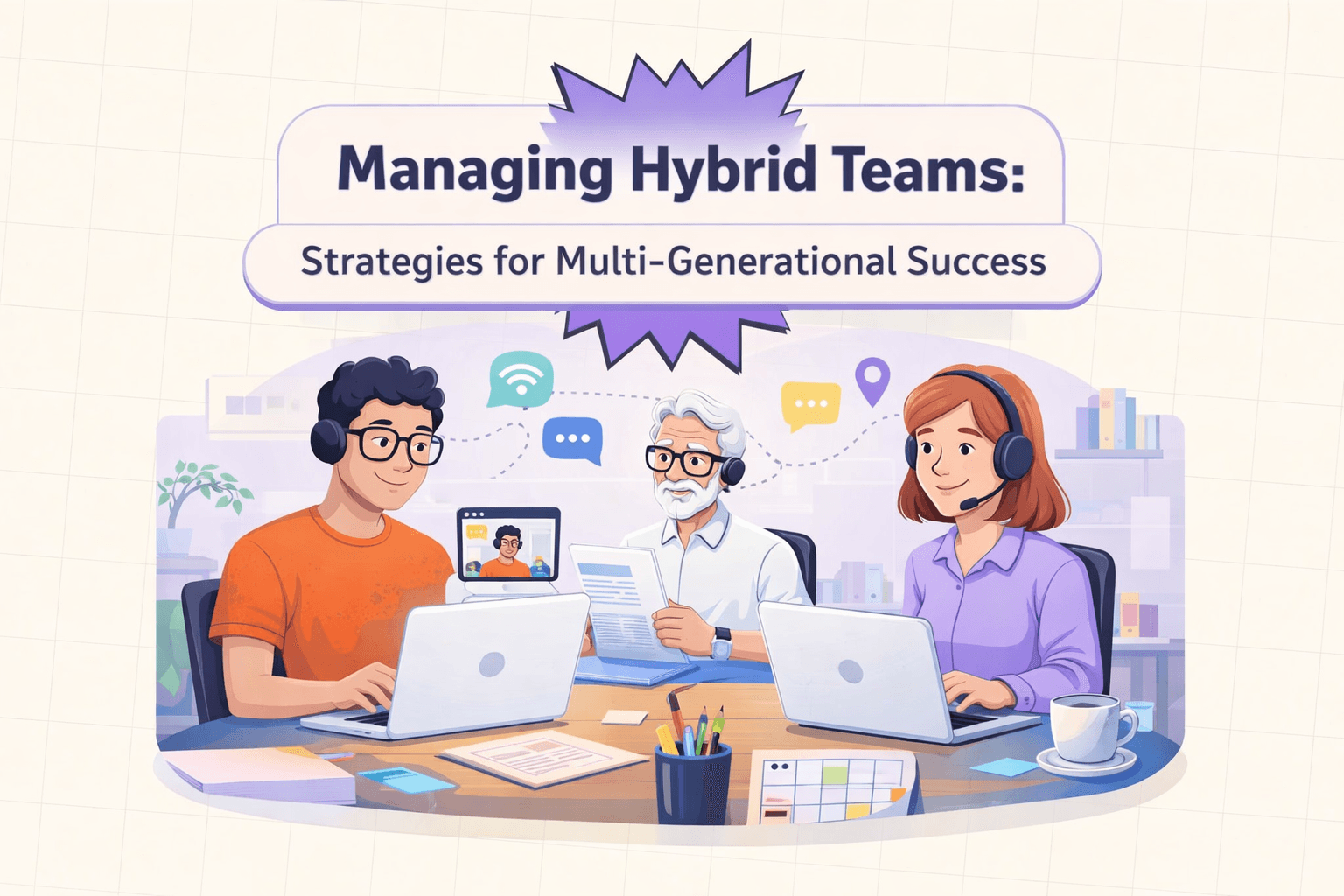
Managing hybrid teams has become essential for project success in today’s diverse workplaces. Leaders must blend in-office and remote workers while navigating the strengths and preferences of Baby Boomers, Gen X, Millennials, and Gen Z. When done right, this mix drives innovation, higher engagement, and better results.
Businesses that master managing hybrid teams report stronger retention and productivity. Yet many struggle with misaligned expectations and communication gaps. This guide shares practical strategies to turn these challenges into advantages for multi-generational project success.

Hybrid work arrangements remain popular. Gallup data shows that six in 10 remote-capable employees prefer hybrid setups. Preferences vary by generation—Millennials often favor flexibility, while Gen Z seeks balance between connection and autonomy. Understanding these differences helps leaders create environments where everyone thrives.
Why Managing Hybrid Teams Matters for Project Success
Organizations with effective hybrid team management complete projects faster and with fewer errors. Diverse generations bring complementary skills: experienced Boomers offer wisdom, while tech-native Gen Z members introduce fresh tools and ideas.
When leaders ignore generational differences, conflicts arise. Older workers may prefer structured schedules, whereas younger ones value async updates. Hybrid setups amplify these issues through distance. However, proactive strategies bridge the gaps and unlock collective potential.
Clear policies prevent misunderstandings. Teams that align on goals early see higher satisfaction. Moreover, inclusive practices reduce turnover, which remains costly in competitive markets.
Common Challenges in Multi-Generational Hybrid Settings
Leaders often face communication breakdowns in managing hybrid teams. In-person staff enjoy quick chats, but remote members miss context. Generational preferences add layers—some generations favor email, others instant messaging or video.
Technology adoption varies too. Not everyone feels comfortable with new platforms, leading to frustration. Additionally, building trust across locations and ages takes effort. Without intentional steps, projects suffer from delays and low morale.
Work-life balance expectations differ as well. Flexible hybrid work strategies must accommodate family needs for parents alongside career growth for early-career talent. Addressing these challenges head-on sets the stage for real progress.
Proven Strategies for Managing Hybrid Teams Effectively
Successful leaders apply targeted approaches to hybrid team management. They focus on inclusion, tools, and accountability. These methods help multi-generational teams deliver outstanding project results consistently.
Start by assessing team needs through surveys. Then customize solutions rather than using one-size-fits-all rules. This builds buy-in across generations.
Tailor Communication to Bridge Generational and Location Gaps
Effective communication stands at the heart of managing hybrid teams. Mix synchronous and asynchronous channels to suit everyone. Schedule video meetings for complex discussions, but use shared docs for updates that fit different time zones.
Train leaders to adapt styles. Boomers may appreciate phone calls, while Millennials and Gen Z prefer Slack or Microsoft Teams. Set team norms early, such as response times and preferred tools.
Regular check-ins maintain connection without micromanaging. Moreover, encourage feedback loops so every generation feels heard. These small adjustments prevent misunderstandings and speed up project decisions.
For deeper insights on this topic, explore our guide to effective workplace communication strategies.
Implement Flexible Work Policies That Work for Everyone
Flexible hybrid work strategies boost engagement across generations. Offer core hours for overlap plus async options for deep focus. This respects different life stages and energy patterns.
Provide clear guidelines on office expectations. Some team members thrive with hybrid schedules that mix two office days and remote work. Track outcomes, not hours, to emphasize results.
According to industry reports, organizations with thoughtful policies see improved well-being and productivity. Customize benefits like wellness stipends or tech allowances to appeal broadly. In turn, teams stay motivated and deliver stronger project outcomes.
Foster Mentorship and Cross-Generational Collaboration
Reverse mentoring programs excel in managing hybrid teams. Pair tech-savvy younger members with experienced seniors. Both sides gain fresh perspectives and skills.
Create mixed project teams deliberately. This promotes knowledge sharing and reduces silos. Virtual team-building activities, such as online workshops or shared interest groups, strengthen bonds regardless of location.
Encourage psychological safety so everyone shares ideas freely. Leaders who model respect across generations set a powerful example. Over time, these efforts create a collaborative culture that accelerates project success.
Choose the Right Tools for Seamless Hybrid Team Management
Technology plays a key role in hybrid team management. Select platforms that support all generations and work styles. Popular options include Microsoft Teams for communication, Asana or Monday.com for project tracking, and shared drives for easy access.
Look for intuitive interfaces with strong training resources. Tools with desk booking features help hybrid offices run smoothly. Integrate video, chat, and file sharing in one ecosystem to minimize switching fatigue.
Test tools with a pilot group representing different generations. Gather feedback before full rollout. When chosen well, these solutions enhance visibility and keep multi-generational teams aligned on project goals.

Set Clear Goals and Track Project Success Metrics
Define shared objectives that everyone understands. Use OKRs or SMART goals visible to all team members. Regular progress reviews help adjust course quickly in hybrid settings.
Measure both output and engagement metrics. Tools like pulse surveys reveal how different generations experience the project. Celebrate wins publicly to reinforce positive behaviors.
Adapt metrics to hybrid realities, such as collaboration quality alongside deadlines. Leaders who prioritize transparency build trust and drive consistent results across generations.
How to Overcome Potential Pitfalls in Managing Hybrid Teams
Even strong plans encounter hurdles. Address equity concerns by ensuring remote workers receive equal development opportunities. Provide training on digital tools for those who need it.
Combat isolation through intentional inclusion events. Monitor burnout signs, especially among caregivers or introverted team members. Adjust workloads proactively.
Stay agile by reviewing policies quarterly. Solicit input from all generations to refine approaches. With vigilance, organizations turn potential issues into opportunities for growth and stronger project performance.
Managing hybrid teams successfully demands empathy, structure, and continuous improvement. By applying these strategies, leaders create environments where multi-generational talent collaborates effectively. Projects finish on time, innovation flourishes, and teams report higher satisfaction.
Organizations that invest in inclusive hybrid work strategies position themselves for long-term success. Start small, measure impact, and scale what works. Your diverse workforce holds the key to exceptional results when supported properly.
admin
Digital product designer and software engineer at Quadiz studio, sharing insights on conversion-driven UI/UX design, modern web development, and building scalable software.