Asking how much agencies charge for UI/UX design returns the most honest useless answer in the industry: it depends. You'll find quotes for seemingly similar work ranging from a few thousand dollars to well over six figures, and both extremes can be legitimate, which is exactly why pricing confuses buyers so much.
This guide makes the numbers usable. The pricing models agencies actually use, benchmark ranges by project type, the real reasons two quotes differ by thousands, and how to compare proposals without getting played. One caveat up front: every range here comes from published industry benchmarks and agency directories, which vary by source, region, and year. Treat them as orientation, not quotations.
How Much Do Agencies Charge for UI UX Design
The short version. Published benchmarks put agency hourly rates roughly between $60 and $250+, with US-based agencies most commonly cited around $100 to $150 per hour and premium studios above that. Per project, typical published ranges run from around $5,000 for small sites to $10,000 to $50,000 for app and MVP design, and far higher for complex enterprise platforms.
Freelancers sit below agencies, roughly $20 to $150+ per hour depending on seniority and region, and in-house designers cost a salary that only makes sense at a certain volume of design work.
Why agencies cost more per hour: you're not buying one person's time. An agency rate bundles research capability, multiple specialists, project management, quality control, and the accountability structure that keeps a project moving when your attention is elsewhere. Sometimes you don't need all of that, which is why the hourly number alone is the wrong thing to shop for. The scope is the right thing.
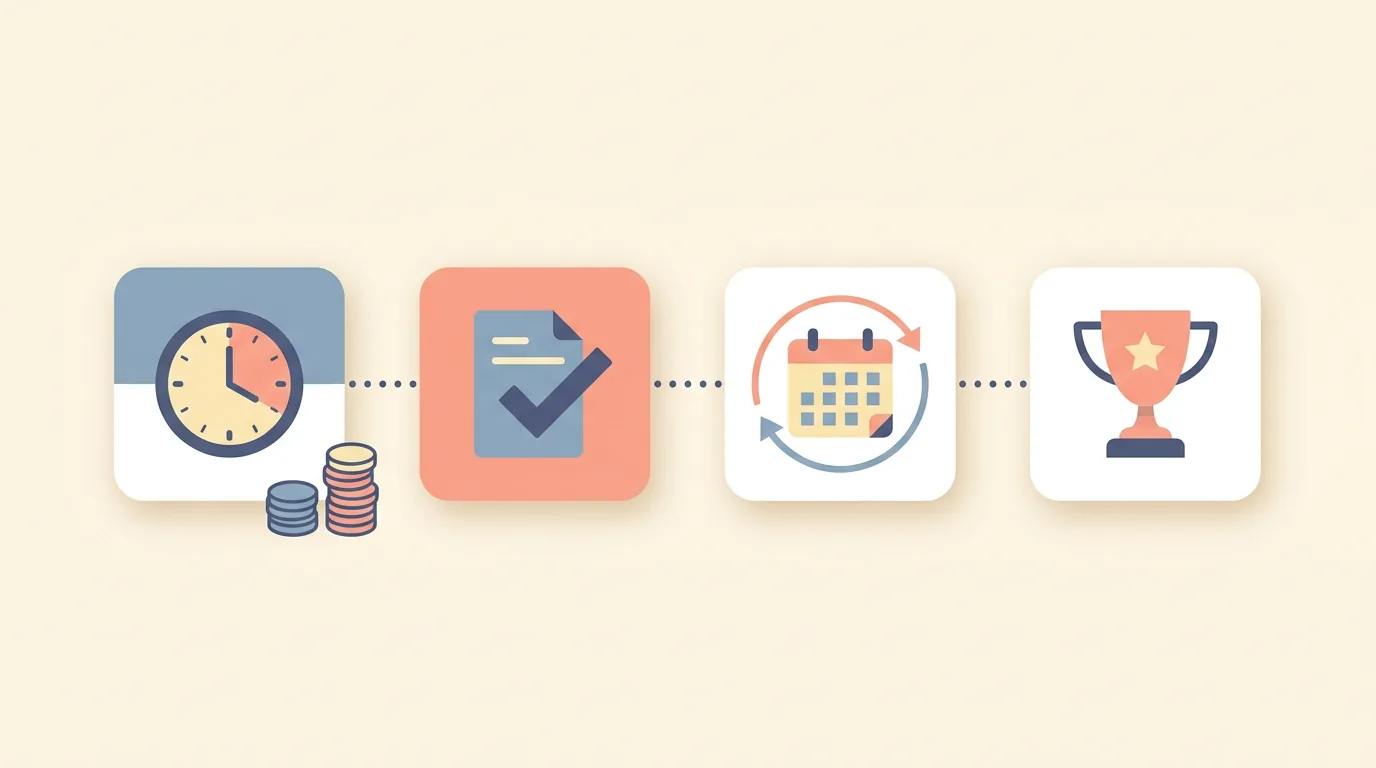
The Four Ways Agencies Price Design Work
Almost every quote you receive uses one of these models, and each fits a different situation.
Hourly billing charges for time actually spent. It fits ongoing tweaks, undefined scope, and work where nobody can predict the effort yet. Its weakness is misalignment: the agency earns more the longer the work takes, which isn't dishonest, but it puts the incentive quietly on their side of the table.
Fixed project pricing sets one price for a defined scope. It fits redesigns, new sites, and anything with clear deliverables. Both sides know the number upfront, and the incentive aligns toward efficiency. The catch: fixed prices are only as honest as the scope document behind them. Vague scope plus fixed price equals change-order battles later.
Retainers buy a recurring slice of design capacity, usually monthly. They fit products that ship continuously and need design as an ongoing function rather than a one-time project.
Value-based pricing ties the fee to business outcomes instead of hours. Rare, higher-stakes, and only sensible where design directly drives measurable revenue.

What UI/UX Design Actually Costs
With the model caveat in mind, here's what published benchmarks consistently show, rounded generously because sources disagree at the edges.
Small jobs: a landing page or single-page design commonly lands between $1,000 and $5,000. A small business marketing site of five to ten pages tends to run $5,000 to $15,000.
Mid-size work: a full website redesign with research, UX structure, and a complete UI system typically starts around $10,000 and reaches $40,000 or more. App and MVP design commonly benchmarks between $10,000 and $50,000 depending on how many flows, platforms, and rounds of testing are included.
Large work: complex products, enterprise platforms, and research-heavy engagements climb well past that, with published benchmarks reaching $100,000 and up at the top end.
Retainers for ongoing design support commonly run $3,000 to $12,000 per month depending on intensity. And region moves every number: US and Western European agencies sit at the top of these ranges, while offshore studios can run far lower, with quality and communication consistency varying just as widely.
It helps to place agencies against the alternatives for a moment. Freelancers, as noted, run roughly $20 to $150+ per hour: cheaper, faster for narrow scopes, and entirely dependent on one person's availability. An in-house designer costs a full-time salary plus benefits, makes sense when design demand is steady, and covers one person's skills rather than a team's. Agencies sit above both on price because they sell something neither option contains: a coordinated team, a process that survives staff changes, and accountability when deadlines slip. Whether that bundle is worth it depends on your project's size and how much of the coordination work you're willing to do yourself, which is exactly the calculation, not just the rate card.
If you take one thing from this section, take this: the ranges are wide because the deliverables inside them are different products. Which brings us to the actually useful part.
Why Two Quotes Can Differ by Thousands
When one agency quotes $15,000 and another quotes $40,000 for "the same project," they are almost never pricing the same project. The difference usually lives in one of these.
Research depth. A quote that includes user interviews, competitor audits, and usability testing is a different product from one that starts at visuals. Research is expensive precisely because it prevents expensive mistakes later.
Testing and iteration. Some quotes include prototype testing with real users and revision rounds driven by findings. Others include one revision round and call it done.
Design system and documentation. A component library with rules, plus handoff specs developers can actually build from, takes real hours. Its absence is invisible in the mockups and very visible in the build.
Who does the work. Senior specialists cost more than juniors learning on your project, and quotes rarely volunteer which one you're getting.
Timeline pressure. Compressing a schedule costs more everywhere in professional services, and design is no exception.
So before comparing numbers, make each agency price the same list: research, architecture, wireframes, mockups, prototype, testing rounds, design system, handoff support, and post-launch availability. Suddenly the gap between quotes either shrinks or explains itself.
How to Compare Quotes Without Getting Burned
A few habits make you nearly immune to bad pricing experiences.
Normalize the deliverables first, as above. Then ask every agency what's explicitly excluded, because exclusions are where surprises live: extra revision rounds, source files, design QA, and post-launch fixes are all common add-ons.
Check the payment structure. A deposit to start, milestone payments at approval points, and a final payment at handoff is the standard, healthy shape. Anything demanding 100% upfront deserves suspicion, and so does a price dramatically below every other quote you've gathered, because underpricing is usually a scope trap or a learning experiment, and you're the syllabus either way.
And ask who exactly works on the project. The senior team that pitched should appear again in the delivery team, in writing.

That's the honest landscape: wide ranges, real reasons behind them, and a comparison method that protects you. As for us, Quadiz doesn't publish a rate card, because projects differ too much for one number to be honest. Tell us about yours through our quote page or browse our design work first, and we'll come back with a scope you can compare against anyone by the standards in this guide. If you'd rather talk it through, book a free call and bring your quotes.
Tags:#Design Pricing#UI UX Cost#Agency Pricing
Written byFounder & Lead Developer
Nayef
Visit Website ↗Tech enthusiast, lead developer, and founder of Quadiz.