In a world where distributed work is the norm, mastering the best practices for managing remote design and dev teams separates thriving product organizations from those struggling with misalignment and burnout. Designers and developers working across time zones need more than just video calls—they require intentional systems that spark creativity, ensure seamless handoffs, and build genuine connection. This guide delivers eight actionable strategies you can implement today to elevate your remote design team management and drive outstanding results.
Whether your team spans continents or simply works from home offices, applying these remote dev team best practices will help you reduce friction, accelerate delivery, and retain top talent. Let’s dive into the approaches that forward-thinking leaders use in 2026.
Why Remote Design and Dev Teams Need Specialized Leadership
Design and development roles demand deep focus, rapid iteration, and cross-functional trust. Traditional office management simply doesn’t translate when team members log in from different countries, cultures, and schedules. Poorly managed remote setups lead to delayed feedback loops, siloed work, and creative stagnation.
Leaders who succeed treat managing remote design and dev teams as a craft. They blend structure with flexibility, technology with humanity, and metrics with empathy. Research shows well-run remote teams deliver 20-30% higher output when equipped with the right frameworks. Start by auditing your current processes against these best practices for managing remote design and dev teams.
Establish Crystal-Clear Communication Protocols
Effective remote design team management begins with communication that feels effortless rather than exhausting. Create a shared playbook that defines response times, preferred channels, and meeting cadences. For example, reserve Slack for quick questions, Loom for async video updates, and Notion for project documentation.
Encourage “working in public” by having designers post Figma links early and developers share GitHub PRs with context. Schedule recurring syncs only when truly necessary—most decisions thrive asynchronously. This approach prevents inbox overload and respects deep-work blocks that creatives and coders need.
Image Description: [A modern laptop screen displaying a clean Slack workspace with organized channels for design handoffs and dev updates, alongside a Figma preview and calendar showing async meeting notes, illustrating seamless communication in remote design and dev team management.]

Choose the Perfect Tech Stack for Seamless Collaboration
The right tools transform leading remote design teams from chaotic to effortless. In 2026, top teams rely on integrated platforms that bridge design and development without manual exports.
Core stack recommendations include:
- Figma or Figma Dev Mode for real-time design-to-code handoff
- GitHub or GitLab paired with Linear for issue tracking
- FigJam or Miro for collaborative brainstorming
- Notion or Coda as the single source of truth
- Zoom or Whereby for occasional face-to-face connection
Test new tools quarterly as a team and retire anything that adds friction. When everyone uses the same ecosystem, asynchronous collaboration for designers and developers becomes second nature, cutting review cycles dramatically.
Implement Asynchronous Workflows That Actually Work
One of the smartest remote dev team best practices is shifting from real-time dependency to async-first execution. Record detailed video walkthroughs instead of scheduling meetings. Use threaded comments in Figma and pull-request descriptions that answer “why” alongside “what.”
Create templates for design critiques, code reviews, and sprint planning so nothing falls through the cracks. Document decisions in a public changelog that late-joining teammates can catch up on instantly. This methodology respects time zones and personal energy peaks while keeping momentum high.
Build a Thriving Remote Team Culture Across Distances
Culture doesn’t happen by accident in remote environments. Dedicate budget and time to virtual team-building that feels authentic rather than forced. Host monthly “show and tell” sessions where designers share mood boards and developers demo side projects. Celebrate launches with digital swag or shared virtual experiences.
Foster psychological safety by encouraging vulnerability in one-on-ones and running anonymous pulse surveys. Pair new hires with “remote buddies” for the first 90 days. Strong building remote team culture directly improves collaboration between design and engineering, leading to fewer revisions and happier stakeholders.
Image Description: [Diverse remote design and dev team members smiling during a virtual team-building session on a large screen, with floating digital icons of design assets, code snippets, coffee mugs, and world map markers in the background, capturing the warmth of building remote team culture.]

Set Measurable Goals and Deliver Timely Feedback
Replace vague check-ins with outcome-focused OKRs that both designers and developers can rally around. Track velocity through cycle time and quality metrics instead of hours logged. Use tools like Linear or Jira to visualize progress without micromanaging.
Feedback should arrive early and often through structured async reviews rather than last-minute surprises. Frame comments around shared goals: “This micro-interaction improves accessibility—here’s how we could enhance it further.” This habit strengthens remote design team management and turns feedback into a growth tool rather than a source of anxiety.
Prioritize Onboarding, Growth, and Retention
Strong best practices for managing remote design and dev teams always include intentional career development. Create 30-60-90 day onboarding roadmaps with clear milestones and check-ins. Offer learning stipends for courses on emerging tools like AI-assisted design or new frontend frameworks.
Run quarterly skill-sharing workshops where team members teach each other. Recognize contributions publicly in a dedicated Slack channel. Teams that invest in growth see 40% lower turnover, proving that people stay where they continue to learn and feel valued.
Avoid These Common Pitfalls That Derail Remote Teams
Even experienced managers slip into habits that harm productivity. Over-scheduling meetings fragments focus time. Relying solely on email creates context loss. Ignoring time-zone differences breeds resentment. Combat these by auditing your calendar monthly and protecting maker time.
For deeper insights on distributed workflows, check our related guide on leading creative teams effectively. External experts at Harvard Business Review also share excellent research on remote team performance.
By steering clear of these traps and consistently applying the best practices for managing remote design and dev teams, you create an environment where talent thrives regardless of location.
Start small this week—pick two strategies and roll them out with your team. Within a month, you’ll notice faster delivery, stronger collaboration, and more innovative outcomes. The future of design and development is remote, and the leaders who master these practices will build the most competitive products of 2026 and beyond.
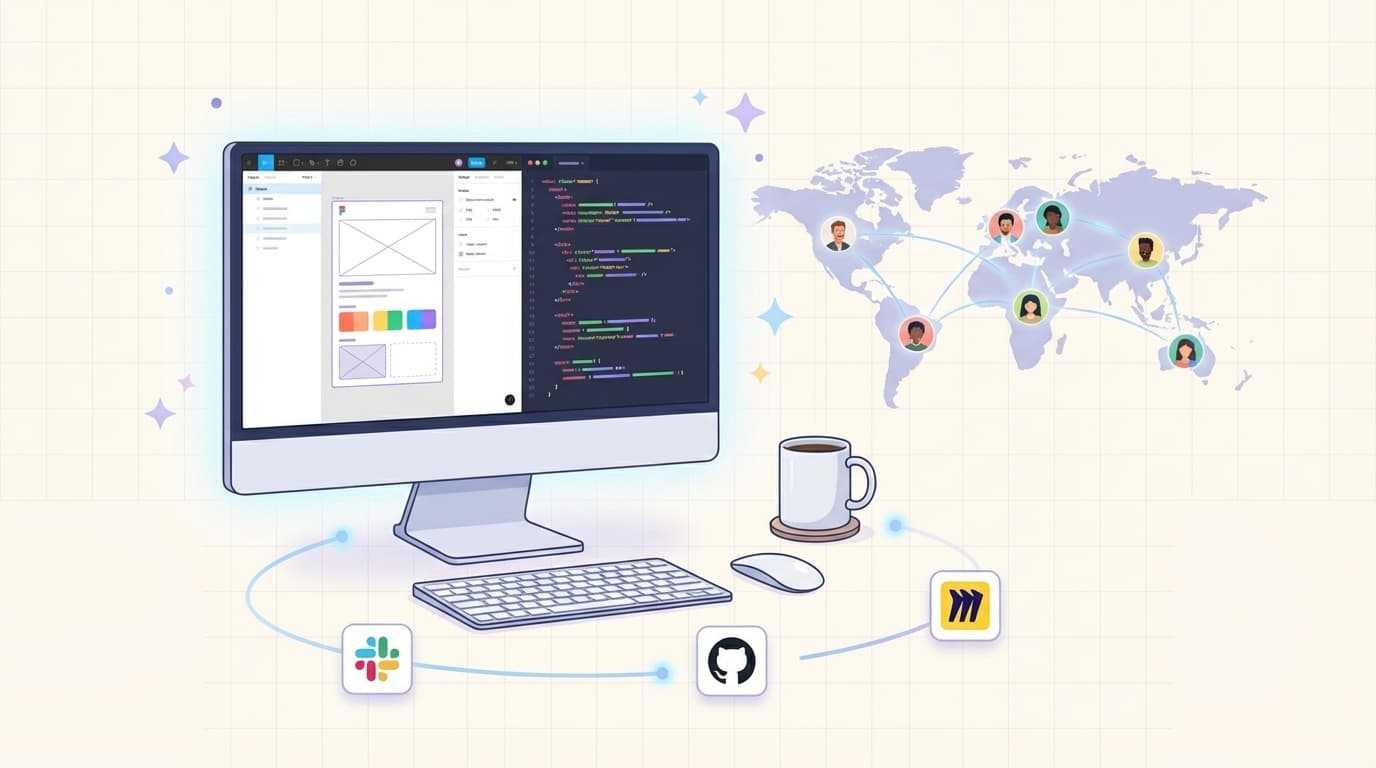
Thumbnail Image Prompt: Create a clean, minimal, and simple thumbnail image for the blog post "Best Practices for Managing Remote Design and Dev Teams." Show a bright, modern home office setup with a large monitor displaying a split-screen of Figma design and code editor, a wireless keyboard, and a coffee mug. In the foreground, subtle floating icons of Slack, GitHub, Miro, and a world map connecting small avatar icons of diverse team members across continents. Use soft neutral colors like light gray, teal accents, and white background. High-resolution, flat design style with plenty of negative space, inspirational yet professional vibe suitable for SEO blog thumbnail. Clean minimalist composition, 16:9 aspect ratio, no text on image.
admin
Digital product designer and software engineer at Quadiz studio, sharing insights on conversion-driven UI/UX design, modern web development, and building scalable software.