In today’s fast-paced business world, picking the right project management methodology can make or break your success. Many teams struggle with Agile vs Waterfall decisions, wondering which path leads to faster delivery, happier clients, and lower risks. The good news? You do not have to choose just one.
Tailoring your approach—whether pure Agile, classic Waterfall, or a smart hybrid—lets you match the method to your project’s unique needs. This guide breaks down the differences, highlights real advantages, and shows exactly how to create optimal results every time. By the end, you will know precisely when to use Agile vs Waterfall or combine both for maximum impact.
What Is Agile Methodology and Why Teams Love It
Agile methodology focuses on flexibility, collaboration, and continuous improvement. Teams break work into short sprints, deliver working increments quickly, and welcome changes even late in the process.
Developers, designers, and stakeholders meet regularly to review progress and adjust priorities. This iterative style suits projects where requirements evolve or customer feedback matters most. Software development, mobile apps, and digital marketing campaigns thrive here because teams can pivot without restarting everything.
Moreover, Agile methodology advantages include higher team morale and faster time-to-market. However, it demands strong communication and self-organizing teams to succeed.
Understanding the Waterfall Model in Detail
Waterfall follows a linear, step-by-step sequence. Teams complete requirements, design, development, testing, and deployment in strict order. Once a phase ends, going back is difficult and expensive.
This structured approach works beautifully for projects with fixed scopes, clear deadlines, and regulatory needs. Construction, manufacturing, and hardware development projects often choose Waterfall because every detail stays predictable from day one.
Waterfall pros cons show its strength in documentation and budgeting. Yet the model struggles when changes arise mid-project, which explains why many organizations now explore alternatives.
Agile vs Waterfall: Key Differences That Matter Most
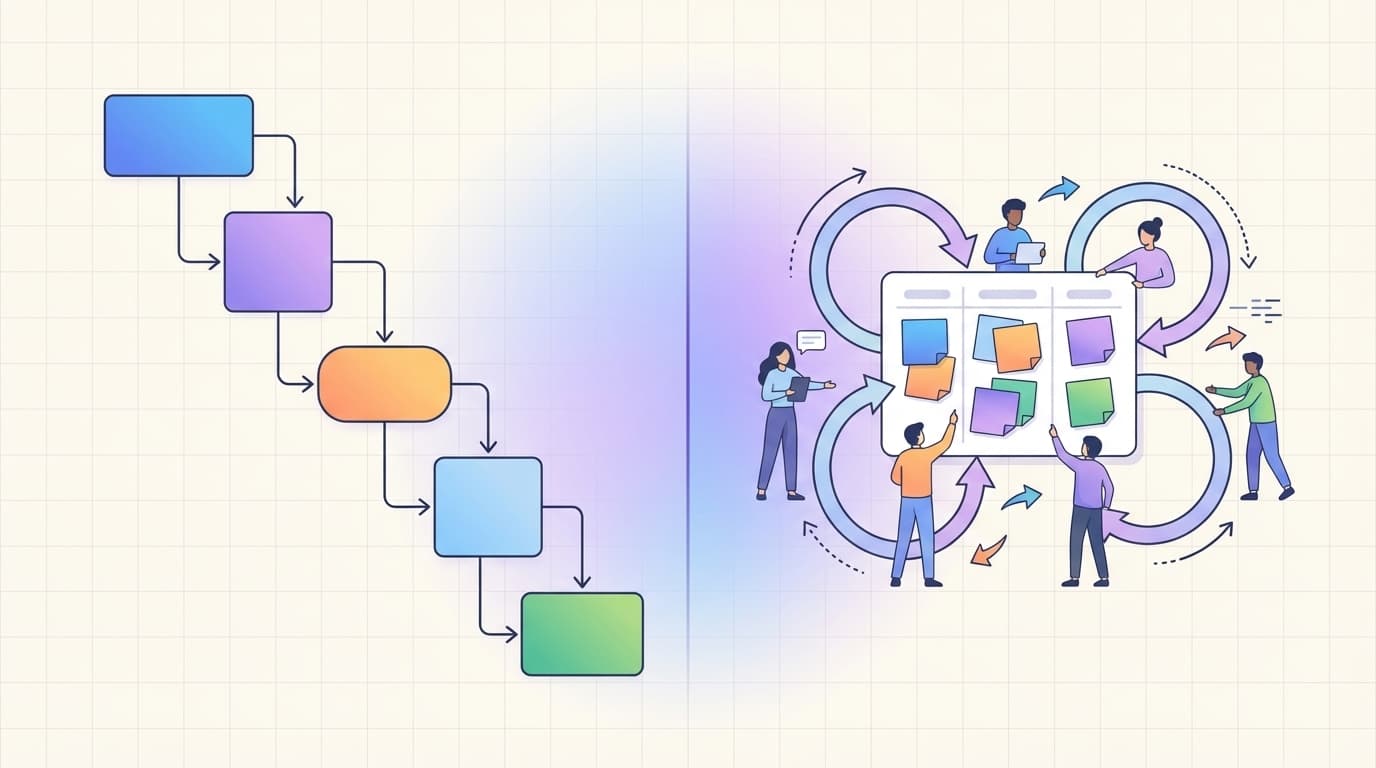
When comparing Agile vs Waterfall, the core contrast lies in flexibility versus predictability. Agile delivers small features often and adapts to feedback. Waterfall locks the entire plan upfront and moves forward only after each stage finishes.
Agile emphasizes people and interactions; Waterfall prioritizes processes and tools. Delivery timing also differs—Agile releases value every few weeks while Waterfall waits until the end.
Teams using Agile vs Waterfall report different risk levels too. Agile spreads risk across iterations, but Waterfall concentrates it at later testing phases. Understanding these points helps you decide which methodology fits your next initiative.

Pros and Cons of Agile vs Waterfall Approaches
Agile methodology advantages shine in uncertain environments. You gain rapid feedback, improved quality, and happier customers who see progress regularly. However, scope creep can occur without firm governance, and documentation sometimes takes a backseat.
Waterfall pros include crystal-clear timelines, easier budgeting, and strong compliance records. The downsides appear when requirements change—revisions become costly and timelines slip.
Many leaders now ask: which delivers better long-term value? The answer depends on your industry and project type. For instance, startups often favor Agile for speed while government contracts lean toward Waterfall for accountability.
When Should You Choose Agile Over Waterfall?
Choose Agile when requirements remain unclear at the start or market conditions shift quickly. Software teams building innovative apps benefit because they test ideas early and incorporate user input immediately.
Additionally, projects with cross-functional teams that thrive on collaboration perform best under Agile. If your stakeholders want frequent updates and are open to evolving scope, this methodology maximizes satisfaction and reduces waste.
Real-world data from 2026 shows Agile teams deliver working software 37% faster on average than traditional methods. Still, success requires experienced facilitators and tools that support transparency.
Is Waterfall Still the Right Choice in 2026?
Yes—Waterfall remains powerful for projects needing predictability. Industries like construction, aerospace, and pharmaceuticals rely on it because regulations demand detailed upfront planning and traceable documentation.
Waterfall pros cons balance out perfectly here: fixed budgets stay realistic and milestones provide clear progress markers. When every requirement is known and changes are rare, this linear model prevents costly surprises.
However, even traditional sectors now blend elements of flexibility. The key question becomes: does your project need absolute certainty or room to adapt?
The Power of Hybrid Agile Waterfall: Best of Both Worlds
Hybrid agile waterfall approaches solve the limitations of choosing only one side. Teams use Waterfall for initial planning, budgeting, and compliance phases, then switch to Agile sprints for development and testing.
This combination delivers structure where needed and flexibility where it counts. Large enterprises in 2026 report hybrid project management reduces risks by 28% while keeping delivery speed high.
For example, a bank might define regulatory requirements through Waterfall then build customer-facing features iteratively with Agile. The result? On-time launches that still feel modern and user-focused.
[Image: Hybrid Agile Waterfall methodology diagram showing phased planning combined with iterative sprints for software development and enterprise projects]

How to Tailor Your Methodology Step by Step for Optimal Results
Start by assessing your project’s requirements stability. Fixed scopes favor Waterfall; evolving needs point to Agile. Next, evaluate team experience and stakeholder availability.
Consider industry regulations too—strict compliance often needs Waterfall elements while creative work benefits from Agile. Budget and timeline constraints also guide your choice. Fixed-price contracts usually suit Waterfall, whereas time-and-materials work aligns with Agile.
Finally, test a small pilot. Run one phase with your chosen approach and gather feedback before scaling. This practical step ensures your tailored methodology truly delivers optimal results instead of following trends blindly.
Many organizations now run parallel streams: Waterfall for infrastructure and Agile for user interfaces. Such smart tailoring creates competitive advantages that pure methods cannot match.
Real-World Examples of Successful Tailoring
A global e-commerce platform used pure Agile to launch new features every two weeks, delighting customers with constant improvements. Meanwhile, its warehouse automation project followed Waterfall to meet safety certifications without delays.
Another example comes from healthcare software. Developers applied hybrid agile waterfall by locking compliance rules first, then iterating on doctor-facing interfaces. The project finished under budget and received excellent user ratings.
These cases prove that blindly following Agile vs Waterfall debates misses the point. Tailoring your methodology based on actual project demands always wins.
Practical Tips to Implement Your Chosen Approach Effectively
Train your team on the selected methodology early. Provide clear roles, tools, and success metrics from day one. Use project management software that supports both styles—many platforms now offer seamless hybrid views.
Schedule regular retrospectives even in Waterfall projects to capture lessons learned. Communicate changes transparently so stakeholders stay aligned. Monitor key performance indicators like velocity for Agile or milestone completion for Waterfall.
Finally, remain open to adjustment. Successful leaders review methodology fit quarterly and refine as needed. This ongoing attention keeps your projects on track and teams motivated.
By applying these strategies, you turn Agile vs Waterfall from a difficult choice into a strategic advantage that drives optimal results every single time.
admin
Digital product designer and software engineer at Quadiz studio, sharing insights on conversion-driven UI/UX design, modern web development, and building scalable software.